
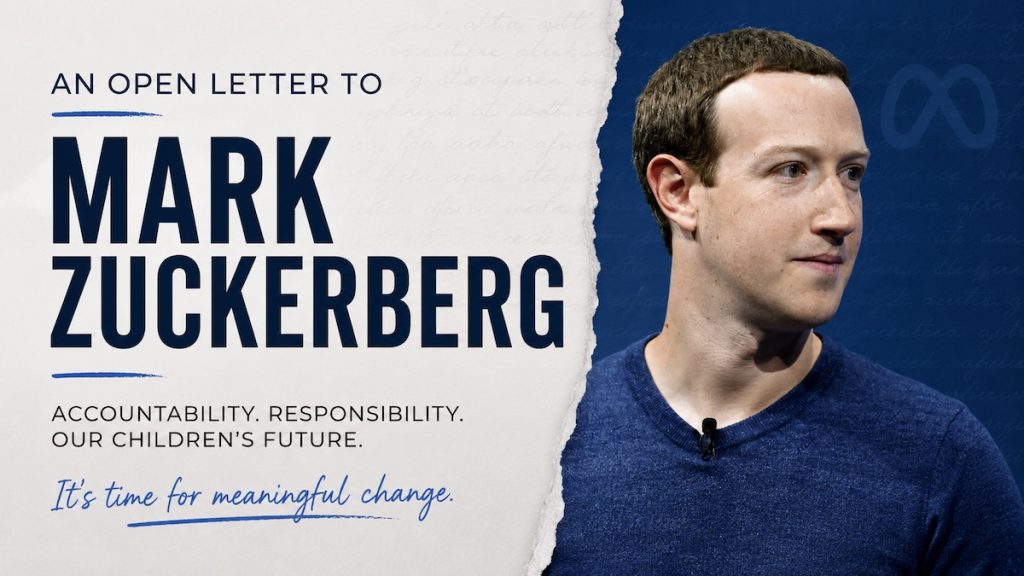
On Thursday, May 21, the news broke that Meta had settled with Breathitt County Schools, a rural school district in Kentucky, in its $60 million lawsuit against your company.
It would have been another bellwether trial, with more than 1,200 school district lawsuits still moving through the courts across the country.
Just two months ago, juries in California and New Mexico ordered Meta to pay a combined $379 million in two high-profile cases. Since then, there has been no meaningful public response from Menlo Park — perhaps in the hope that the outrage would fade.
But it hasn’t.
And it won’t.
Not for the thousands of parents watching their children struggle daily with platforms engineered to keep them engaged for as long as possible. Not for educators trying to compete with algorithms designed to hijack attention. And not for the teens themselves, many of whom have understood that something is wrong long before the adults around them did.
The financial picture is shifting — and not in your favor.
The day before the Kentucky settlement, Meta announced layoffs affecting roughly 8,000 employees while redirecting resources toward AI initiatives. Your company also reported its first meaningful decline in user growth in more than a decade, alongside a substantial increase in debt.
Your investors are watching. So are families.
As a media literacy educator who has worked with teen girls for more than twenty years, I have watched Facebook and Instagram evolve from exciting new tools into something far more powerful — and far more difficult for young people to navigate safely.
I watched thousands of girls absorb impossible standards and learn new self-harming techniques through your platforms while becoming increasingly unable to stop using them. My nonprofit worked to help real girls in real rooms make sense of what was happening to them: algorithmically amplified social comparison, invalidation, exclusion, and anxiety. Then I watched as an adolescent mental health crisis emerged alongside it all.
And yet meaningful change by Meta has remained elusive.
Meta continues to claim Instagram’s Teen Accounts are its answer to these concerns, despite the obvious reality that millions of children can simply misrepresent their ages when creating accounts. The company continues presenting safety features while maintaining the engagement systems that keep a hold on teens’ attention.
Parents, educators, and teens themselves can see this contradiction.
As the controlling decision-maker at Meta, you are uniquely positioned to change course. Unlike most CEOs, you operate with extraordinary insulation from shareholder or board-level removal. That power carries an equally extraordinary level of responsibility.
Your board is starting to catch on, so the pressure is mounting.
So today, I am asking you to choose accountability.
Here are my recommendations:
- Stop fighting these cases to delay accountability. Compensate the families, schools, and communities bringing these lawsuits without forcing years of additional litigation and testimony.
- Compete on safety instead of “engagement”. Build the safest major social platform in the industry. Seek guidance from independent experts, including advisors affiliated with the Inspired Internet Pledge and Boston Children’s Digital Wellness Lab. Invest seriously in content moderation and healthier design standards — even when doing so affects engagement metrics.
- Make a real apology. Not a carefully managed public relations performance, but an authentic acknowledgment of the harms your company contributed to.
- Integrate evidence-based media literacy and mental health education into your platforms, including Instagram, Facebook, WhatsApp, Horizon Worlds, and future AI products developed by Meta.
You still have the opportunity to become something rare in modern tech culture: a powerful executive who recognized the damage, accepted responsibility, and changed direction before collapse made the decision unavoidable.
Yes, meaningful reform would likely reduce growth and affect shareholder returns.
These efforts would cut into Meta’s bottom line. But with a personal net worth exceeding $200 billion, you are uniquely positioned to make that choice without fearing personal ruin. Few leaders in modern history have held that kind of power.
But somewhere along the timeline, growth and responsibility began moving in opposite directions.
Leadership is revealed in the moment a person recognizes that reality — and chooses responsibility anyway.
The window for choosing accountability over forced correction is narrowing quickly. The only remaining uncertainty is whether you will act while the choice still belongs to you.
Sincerely,
Jennifer Berger
Media Literacy Educator with 20+ Years’ Experience Working with Teens
Founder and Executive Director of Ready Set Screen
San Francisco, CA

Leave a Reply