
Rather than writing their own “think piece” on school phone bans, The New York Times did something interesting recently: They went right to the most impacted party (the kids themselves) and asked what they think of school phone bans.
As an organization that believes strongly in empowering teens and tweens with the knowledge, skills, and guidance they need to make smart decisions around social media and smartphones, Ready Set Screen is thrilled to see this approach, and encouraged by the results.
So, what did the kids have to say? And what might that mean for parents, teachers, and teens?
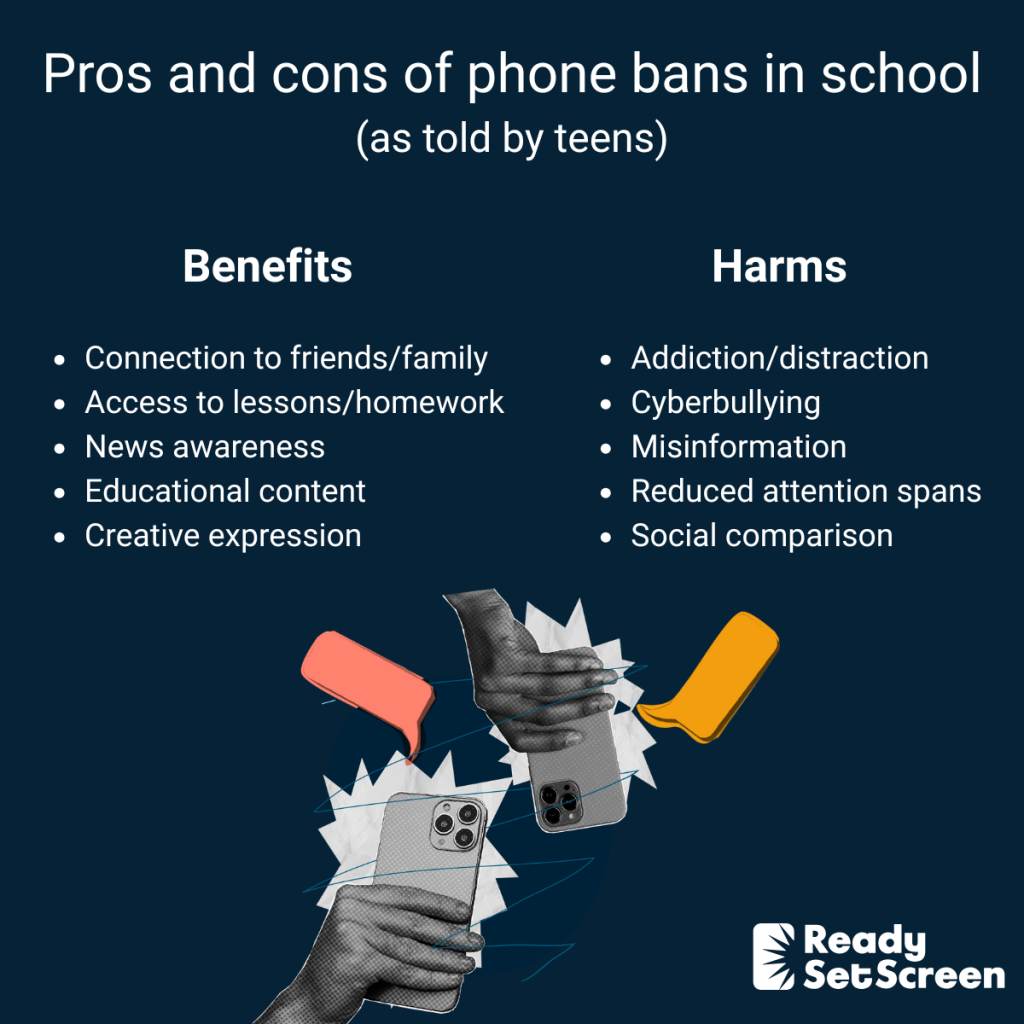
- Teens are aware of the issues with smartphones, but don’t think bans are the answer.
Most students recognize technology’s problems, but believe education, gradual limits, and personal responsibility are more effective than blanket prohibitions. In short: They want to be treated as people who can handle the new responsibilities that come with getting a smartphone, but recognize the need for education and assistance in integrating one into their lives. - Young people are attuned to the double standards around technology.
As schoolwork itself is increasingly conducted on tablets and laptops, kids wonder why those screens are treated differently than smartphones. The simple answer to those of us who follow the research is that phones provide more direct and “always on” access to experiences that can disrupt, distract, and endanger teens if not handled with care. That includes addictive apps, unfiltered connections/conversations, targeted advertising, and misinformation. Helping kids understand this distinction could reduce the at-home friction that comes from parents resisting smartphone adoption. - They favor teaching digital literacy and healthy habits over punishment.
There was a recurring theme throughout the conversation: “Help us help ourselves.” In that vein, the teens noted that education around responsible use would be more effective than restrictions and punishment. They also understood the need for ongoing parental guidance as well as potential time management controls that could help them when self-regulation fails. - They believe parents should ultimately make the call.
There were strong opinions among respondents about who should regulate their use of smartphones, with most favoring parents as the primary authority and strongly opposing government intervention — as they believe the government has “bigger fish to fry,” according to one teen. This aligns well with our approach, which works with teens to identify a “trusted adult” (a parent, aunt/uncle, coach, teacher, etc…) they can rely on to guide them when technology use starts to get a little worrisome.
At the end of the day, we came away from the article encouraged. We were particularly heartened to see the teens so directly acknowledge the need for education, guidance, and tools to adopt technology on their terms — and be able to ask for help when they need it. It bears out our findings that led us to create The Social Media Driver’s License, and our approach in using media literacy to empower teens to make smart decisions while teaching them how to ask for help when they need it.
What do you think?



Leave a Reply